
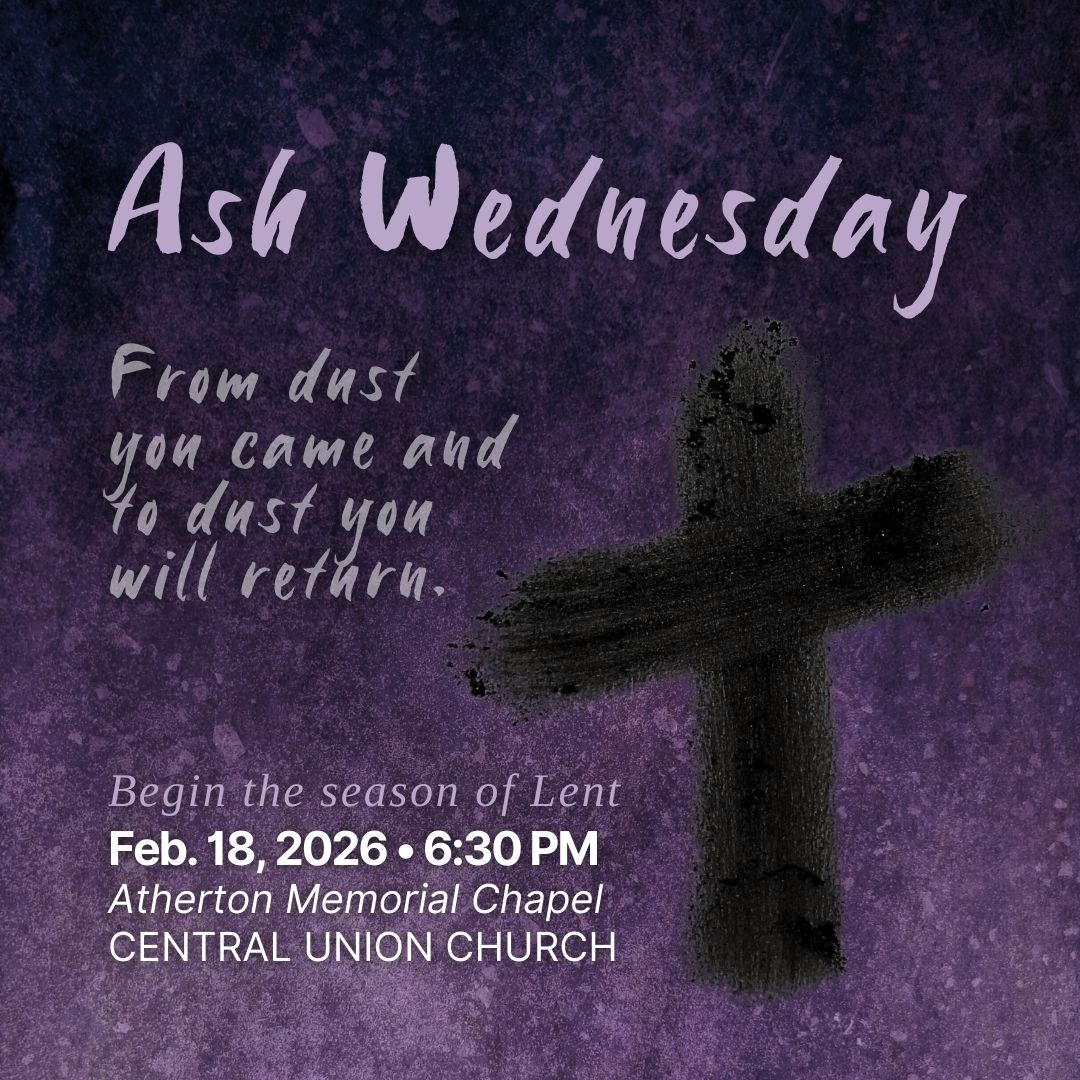
Ash Wednesday begins the season of Lent which are the forty days of preparation before Holy Week and Easter. In Scripture, forty is a sacred number: Noah’s days in the ark, Israel’s years in the wilderness, and Jesus’ forty days of testing and grounding before his ministry.
Lent invites us into our own forty‑day renewal – a “springtime” of the spirit – through prayer, reflection, and acts of compassion. The ashes, often made from burning last year’s Palm Sunday palms, are an ancient sign of repentance and a reminder of our mortality. They tell the truth: we are dust. And yet, in God’s hands, dust is beloved and full of possibility. Receiving ashes tonight is not about shame, but about grace. It reminds us that God’s love is stronger than sin and death, and that in Christ, God stays in communion with us – breathing new life into every place that feels fragile or worn. So we begin Lent with honesty, hope, and trust that resurrection is already on its way.
~ ~ ~ ~ ~
Every year, the congregations of the United Church of Christ joins Christians around the world in marking Ash Wednesday not as a day of shame, but as a day of truth-telling and hope. The ashes we receive often come from burning the palms from last year’s Palm Sunday as a beautiful reminder that our celebrations and our failures, our highs and our lows, all become part of the journey God uses to shape us. The ashes remind us of something honest: we are human. We are finite. We are dust. And yet we are beloved dust. Formed by God, held by God, and invited into transformation.
In the UCC, Ash Wednesday isn’t about fear of judgment. It’s about opening our hearts. It’s about naming the places where we’ve fallen short, both personally and collectively, and trusting that God’s grace is already at work, healing and renewing. We enter Lent not to earn God’s love, but to remember we already have it. The ashes mark the beginning of a journey: a journey toward justice, compassion, and deeper alignment with the way of Jesus. On Ash Wednesday, we wear ashes not as a burden, but as a blessing. A reminder that God meets us in our humanity and calls us into new life.